
Volume, not weight, sets the size of a load
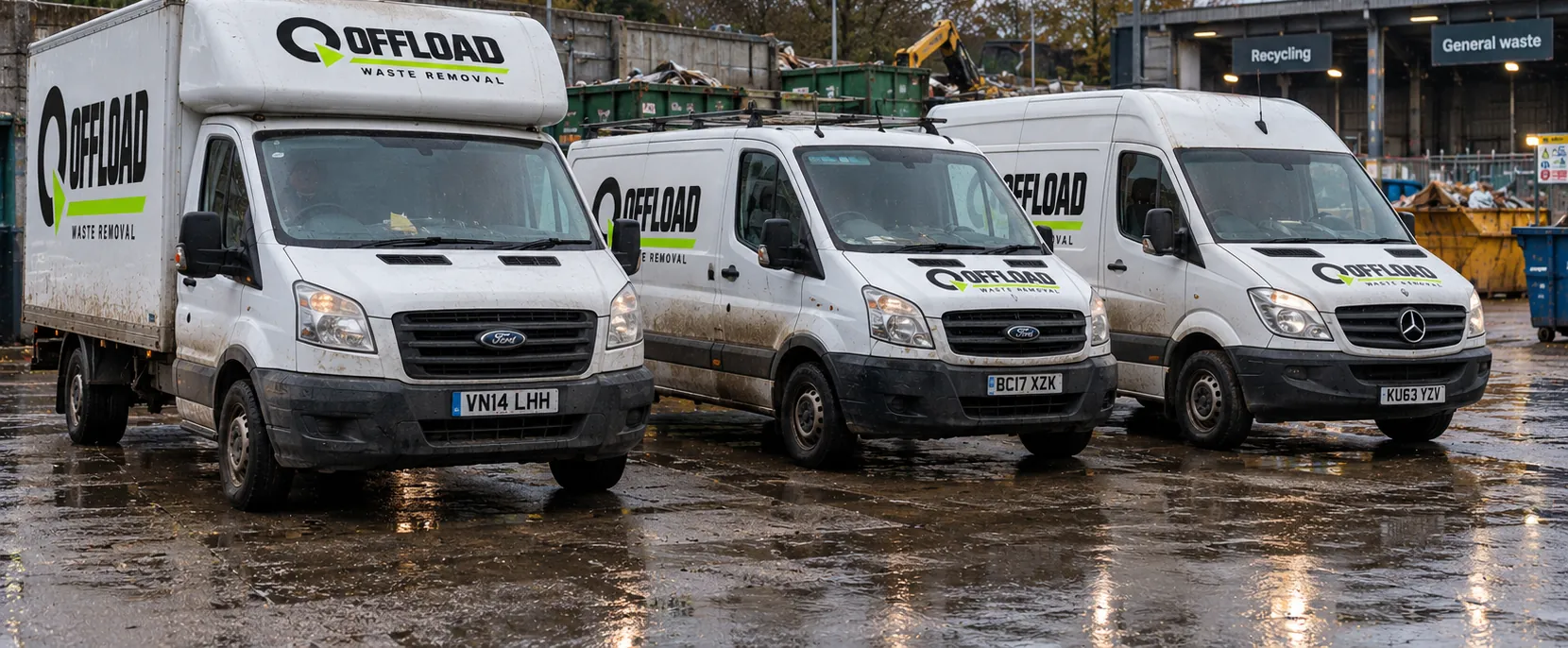
A van body has a fixed amount of space. What limits most household clearances is how much of that space your waste occupies, not how heavy it is. A tall wardrobe weighs less than a heap of soil, but it takes up far more room.
That said, weight is not irrelevant. Vans have legal payload limits, and dense materials such as soil, rubble, tiles or stone can reach the weight limit long before the space is full. Very heavy loads are often handled separately for this reason, and disposal sites can treat them differently. If your waste is mostly heavy material, tell us early.
Cubic yards and van fractions
You will hear two ways of describing a load. One is cubic yards, a unit of volume often used in the waste trade. The other is a fraction of a van, such as a quarter, half or a full load.
The fraction is easier to picture. Imagine the empty body of a van and ask how much of it your pile would fill. Bear in mind that vans come in different sizes, so a half load in one is not the same as a half load in another. Cubic yards give a more exact figure, but most people find fractions more natural. Either way, the point is the same. A quote is based on the space your waste will need.
- A few bags and a small chair sit in the smallest part of a van
- A single sofa and a few boxes can fill a noticeable share
- A full room of furniture, or a garage clear-out, may need a full van or more than one trip
Why bulky items waste space
Solid, awkward shapes leave gaps. A wardrobe is mostly air. A bed frame, a table with legs on, a trampoline or a large mirror all use up more floor space in the van than the material itself would need if it were flat or stacked.
That wasted space counts, because the crew cannot fill the gaps with something else. This is why a pile that looks modest on the drive can turn out to be a large load once everything is loaded around its awkward pieces.
Dismantling helps
Taking things apart is one of the most useful things you can do before a collection. Flat panels stack. Legs, doors and shelves can lie side by side. A wardrobe that arrives as a set of boards takes a fraction of the space it did standing up.
Only do this if you are comfortable with it. Use the right tools, keep fingers clear of splintered edges, and do not tackle anything that feels unsafe. Some items, such as old upholstered furniture, are best left intact for reasons that are covered in our guide to old sofas and flame retardant rules. If in doubt, leave it whole and tell the crew.
How to estimate your own pile
You can get a reasonable idea without any special equipment. The trick is to gather everything in one place first, since a pile spread across a house is very hard to judge.
Bring it together
Move the waste to one room, the garage or the drive so you can see it all at once.
Compare it to something you know
Estimate how much of a garage door, a car boot or a parking space it fills, and how high it stacks.
Count the awkward pieces
Make a note of large furniture, mattresses, appliances and anything that will not come apart.
Take photos
One wide photo of the whole pile and a few close ones of large items are worth more than any description.
Why photos make the estimate better
A crew looking at a photograph can judge volume, spot heavy or unusual items and ask a follow-up question before the van sets off. That avoids nasty surprises on the day, whether you are clearing a flat in the city centre or a house in Adel. If a job is larger than it looked, we would rather know beforehand and plan for a second trip than find out with the van already full.
Space matters more than weightFor most household waste, the space a pile fills decides how much van it needs. Take things apart where it is safe to, gather the waste in one spot and send photos.
Questions
Is a quarter van the same in every van?
No. Vans come in different sizes, so a fraction only makes sense for a particular vehicle. Cubic yards give a fixed measure, and photos let us translate your pile into whichever we use.
Do heavy items count for more?
Sometimes. Dense material such as soil, rubble and stone can hit a van's weight limit before the space runs out, so it is treated differently. Tell us if your waste is mostly heavy.
Should I take furniture apart first?
If you can do so safely, yes, because flat pieces pack far tighter. If you are not sure, leave it whole and mention it when you send your photos.
What if my pile turns out bigger than expected?
The crew will tell you before loading more than was quoted for. Clear photos at the start make this much less likely.
Services that help
Man and van
A wait and load alternative to skip hire, with a licensed carrier.
See the serviceRubbish removal
Rooms, lofts, garages and one-off loads taken away.
See the serviceBulky waste
Sofas, beds, wardrobes and large items taken from anywhere in the house.
See the serviceLocal pages
- Waste removal in Adel, Cookridge and WeetwoodLS16
- Waste removal in MorleyLS27
- Waste removal in Leeds city centreLS1, LS2
More guides
- How a van waste removal quote is built in Leeds
- Using Leeds household waste recycling sites: who they suit
- Council bulky collection or private waste removal in Leeds?
- How to get rid of a sofa in Leeds
- Clearing a house after a death: a gentle practical guide
- End of tenancy clearance checklist for tenants and landlords
- Waste transfer notes and your duty of care
- What cannot go in a skip in Leeds, and why
- How to check a waste carrier is registered in Leeds
- Fly-tipping and your duty of care as a householder in Leeds
- Student move out rubbish in Leeds: a guide for tenants and landlords
- How to prepare for a house clearance in Leeds
- Clearing a loft safely: a practical guide for Leeds homes
- Clearing a flat in Leeds city centre: lifts, loading bays and timing
- Donate, sell or dispose of old furniture in Leeds
- What happens to your waste after a Leeds collection
- Clearing your home before you sell in Leeds
- Garden waste in Leeds: what to do with it
- Clearing a hoarded home with respect in Leeds
- Old sofas and flame retardant rules: what Leeds households should know